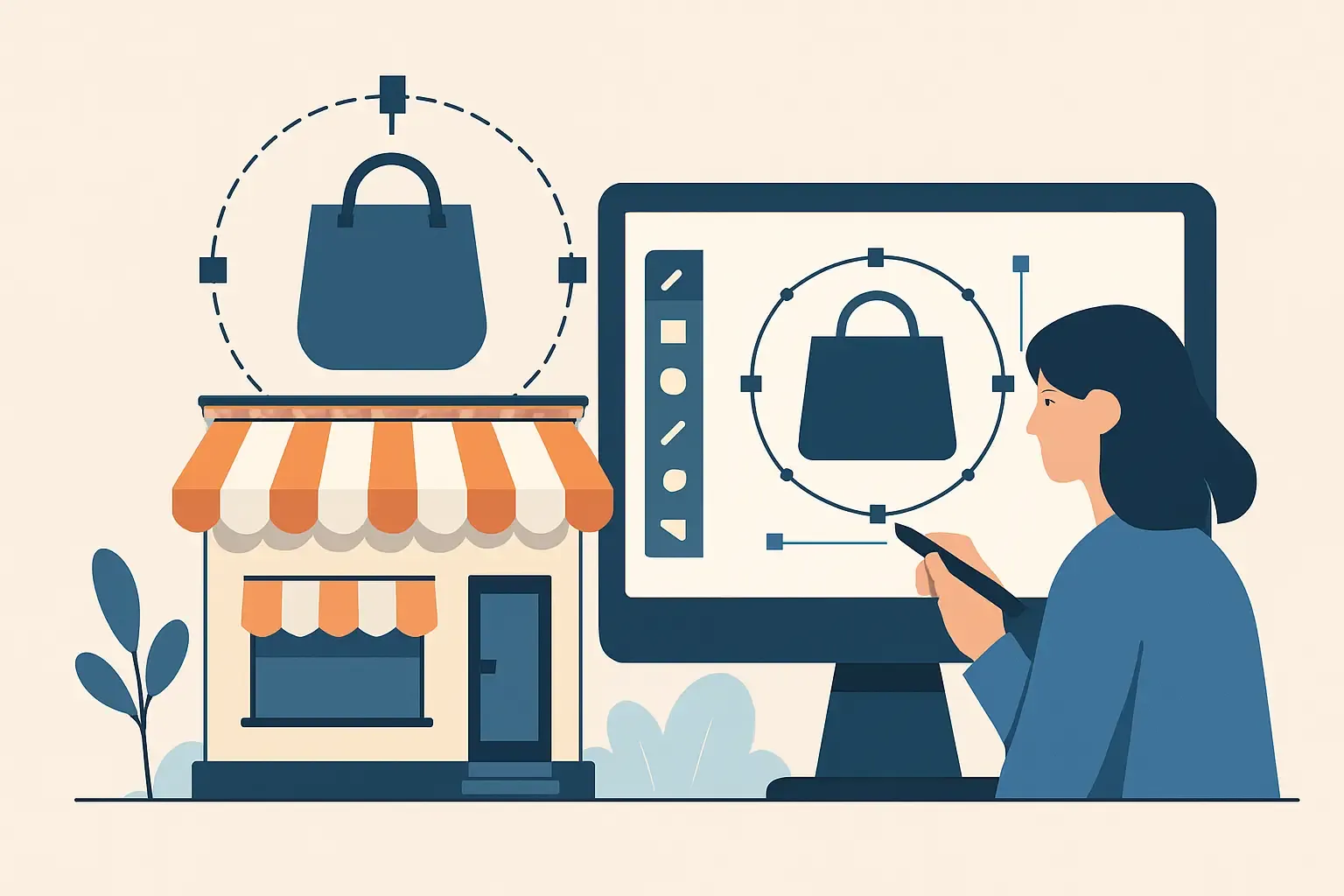
TL;DR: Branding is the decision about who your shop is to the people who walk past it. Graphic design is how that decision becomes visible: the logo, the sign, the packaging, the website, the social posts. The shops that stand out get the order right, defining audience, positioning, and story first, then designing to match, then applying the same look everywhere. Consistency is what turns a nice logo into recognition, and recognition is what gets people through the door.
A local shop already has something a chain can't buy: it belongs to a place. That alone doesn't make the register ring. When there are six other options within a few miles, customers pick the business they recognize and trust, and recognition is built on purpose.
What branding actually covers
Branding is the story, values, and personality your shop puts in front of the community. Done well, it creates an emotional connection, which is what turns a customer into someone who recommends you.
The parts are concrete. Your logo. Your colors. Your typography. The voice you use in an email, on a sign, in a caption. And the experience customers have when they deal with you, which either backs up the message or contradicts it. A family bakery leaning on warmth and tradition is making a branding decision, and every design choice after that should support it.
Where graphic design does the work
Branding sets the direction. Graphic design makes it something people can see.
A well-designed storefront or a merchandise display pulls people in off the sidewalk. Online, the same job falls to your website and your social graphics. Color, type, and imagery communicate before anyone reads a word. Bright colors read as energetic and inviting. Muted tones read as calm and expensive. Those choices should come from who your customer is, not from what looked good in a template.
Consistency is the part most shops skip
Your sign, your business cards, your packaging, and your website should look like they came from the same business. That sounds obvious and it is routinely ignored, usually because pieces get made at different times by different people. Uniformity is what builds familiarity, and familiarity is what customers read as trustworthy.
Start with strategy, not a logo
Most rebrands go sideways because they start with the fun part. Get three things settled first.
Know your audience. Younger or older, budget-conscious or willing to pay for quality, local regulars or people passing through. Design that speaks to the wrong group is just decoration. If you want a stronger connection with the people nearby, that starts with knowing who they are.
Know your unique selling proposition and your values. Every business has a reason customers choose it over the shop down the street. Name yours and put it where people can see it. A store built on eco-friendly products should show that in its materials, its colors, and its messaging, not bury it on an About page.
Know your narrative. Your brand story is partly what you say and partly what customers repeat about you. A clear narrative is what makes a shop the default answer when someone asks a neighbor for a recommendation.
Tools worth knowing
Canva handles most day-to-day needs. It's drag and drop, template-driven, and good enough for social posts, flyers, and menus once you've locked in your colors and fonts. Adobe Illustrator is the step up when you need real control, and it's where logos should be built so they scale cleanly from a business card to a truck wrap. Procreate suits hand-drawn illustration and gives a brand a personal, made-by-a-human feel that stock work can't fake.
Tools don't fix strategy. They speed up execution once the strategy is settled.
When to bring in an agency
An agency earns its fee when branding has to work across a lot of places at once: signage, print, website, ads, social, packaging. That's where consistency usually breaks down, and where an outside team keeps the design tied to business goals instead of taste.
11 Marketing + Design works this way, pairing design with the technical side so the site is responsive, ADA-compliant, and built to be found.
A practical order to work through
Start with a brand audit. Put every piece you currently use on one table, physical and digital, and be honest about what's inconsistent or dated.
Define your position next: how you want to be perceived in your market, in a sentence you'd say out loud.
Then write brand guidelines, even a one-page version. Colors with hex codes, fonts, logo spacing rules, what not to do. This is the document that keeps things from drifting once other people start making assets.
From there, develop the visual assets: logo first, then the supporting pieces you actually use. Roll them out across every touchpoint, and don't leave the old sign or the old business cards in circulation.
Finally, watch what happens. Recognition, foot traffic, and the questions customers ask you tell you whether the positioning landed. Adjust from there.
What good branding returns
A distinct brand gets recognized faster, keeps customers coming back, and raises perceived value, which lets you compete on something other than price.
It's also long work. A shop that keeps showing up in the community and adjusts as customer preferences change stays relevant. One that sets a logo in 2019 and never touches it again slowly stops matching the business it has become. If you're rethinking yours, start with who you're for and what you want to be known for. The design gets much easier after that.
FAQs
What's the difference between branding and graphic design?
Branding is the strategy: who your shop is, who it's for, and what it stands for. Graphic design is how that strategy becomes visible through your logo, signage, packaging, website, and social content.
Where should a local shop start with branding?
Start with audience, unique selling proposition, and brand values, then write the story you want customers to repeat. Design decisions get much easier once those are settled.
Why does design consistency matter so much?
Consistency across your sign, print materials, and website builds familiarity, and familiarity is what customers read as trustworthy. Mismatched pieces make an established business look improvised.
What design tools work for a small shop?
Canva covers everyday social posts and flyers, Illustrator is where logos should be built so they scale cleanly, and Procreate suits hand-drawn illustration. None of them replace a clear brand strategy.
When is it worth hiring an agency instead of doing it in-house?
When the branding has to hold together across signage, print, website, ads, and social at once. That's where consistency usually breaks down and where outside help keeps design tied to business goals.